Should You Alter It or Replace It? A Kuala Lumpur Tailor's Honest Framework
When is a garment worth altering, and when should you let it go? A working framework from a Kuala Lumpur master tailor, with local pricing context.
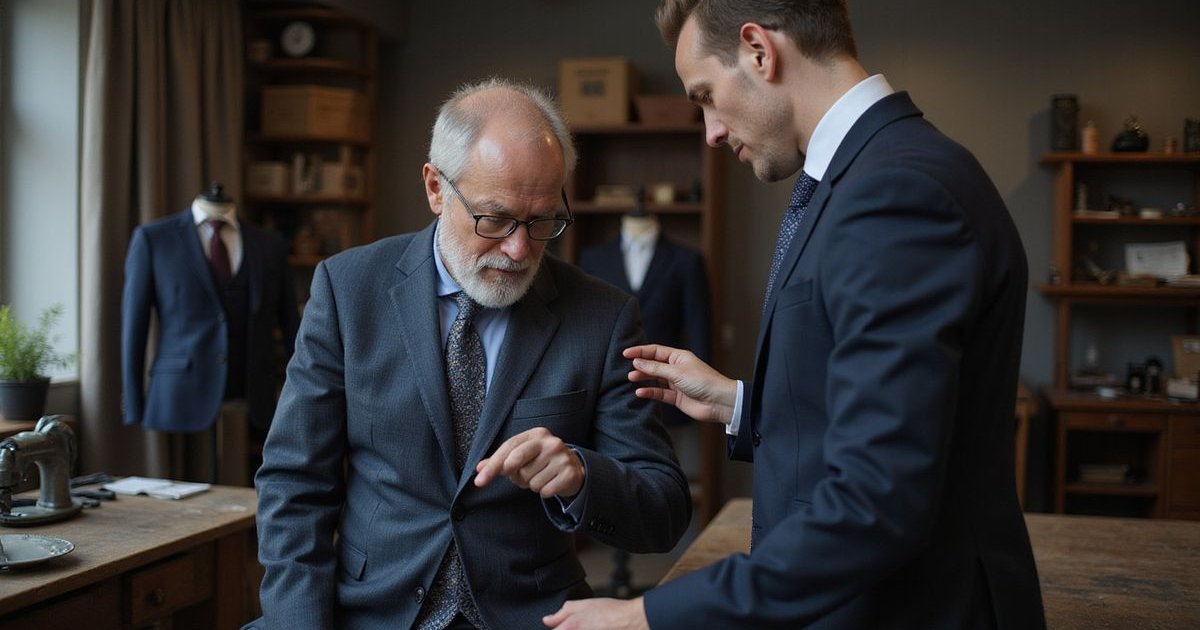
The single most useful question a client can ask us at the bench is whether a garment is actually worth saving. It is rarely an emotional question. It is a question about value, structural feasibility, and the realistic outcome you will live with afterwards. Our job is to give you the answer you would want from a friend who happens to know how clothing is built.
In our years working with Kuala Lumpur professionals, we have seen plenty of cases where alteration costs were heading toward the original purchase price, and other cases where a small investment rescued a much-loved suit for another decade of wear. The decision is rarely obvious from the outside, which is exactly why a proper assessment matters before any thread is touched.
A Framework That Beats Gut Feel
Most clients walk in with a gut sense that the garment “should be saveable” and a hope that we will validate it. We try to replace that feeling with a working framework that holds up under pressure.
The Local Climate Factor Most Tailors Ignore
Before any cost calculation, we evaluate fabric integrity in the context of Kuala Lumpur’s environment. KL humidity is brutal on natural fibres. A wool jacket that lived three years in a Mont Kiara wardrobe with poor ventilation will not behave the same as one stored in a temperate climate. Linings yellow faster, silk threads weaken, and certain dye combinations fade unevenly when exposed to our intense sunlight.
We hold the cloth up to natural light, look for thinning at the elbows and seat, check for ghost stitching from past alterations, and only then talk about costs. If the fabric will not last another three years, no alteration in the world will rescue it.
The Cost-to-Value Calculation
Once the structural and fabric questions are answered, the maths becomes much simpler.
We use a “fifty percent rule” borrowed from asset management. If the alteration cost will exceed half of the garment’s current replacement value, the spend rarely makes sense.
Practical Kuala Lumpur examples:
- RM 250 of work on a RM 400 fast-fashion blazer is almost never worth it.
- RM 180 of work on a RM 6,000 Loro Piana commission is an obvious yes.
- RM 350 on a RM 1,500 shirt-and-jacket combo you wear weekly sits in the “consider carefully” zone.
But raw replacement value is not the only number that matters. There are at least three other factors that often outweigh it.
Sentimental weight. Your father’s wedding suit from a Bukit Bintang house that closed two decades ago is irreplaceable, full stop. If we can rescue it without compromising the structure, we will, and we will not lecture you about the spreadsheet.
Scarcity. A Holland & Sherry length from a discontinued bunch, or a piece of vintage Italian cloth you found on a trip to Florence, may justify investment that pure resale logic would not.
Real-world utility. A suit that will sit unused after the alteration is wasted ringgit. A suit you will wear weekly for the next five years is the cheapest cost-per-wear in your wardrobe.
The Alterations That Almost Always Earn Their Keep
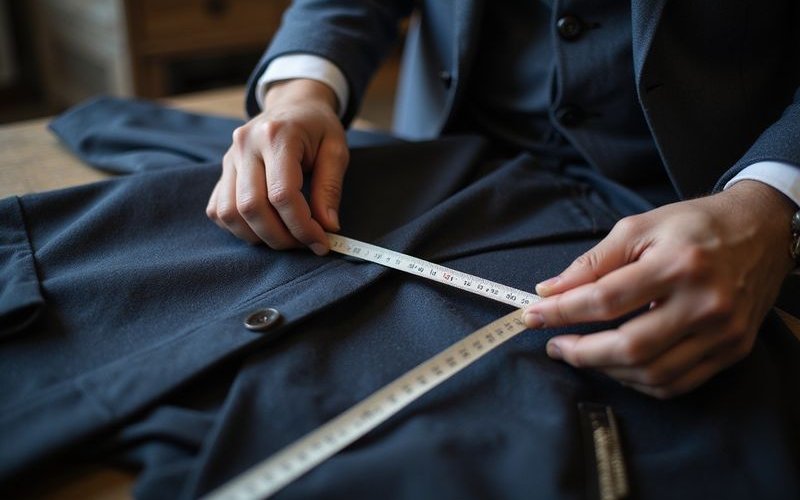
Some interventions deliver outsized impact for very modest cost.
Hemming trousers is the simplest and the most universal. Almost every off-the-rack garment needs it, and a clean break over the shoe instantly upgrades the entire outfit.
Waist suppression on jackets transforms a boxy fit into a tailored silhouette. If the shoulders sit correctly but the body is full, this is the highest-impact alteration we offer.
Sleeve shortening or lengthening is invisible when done well and obvious when neglected. A correct cuff break makes any jacket look more expensive.
Tapering trouser legs brings older cuts into modern proportion and can extend the wardrobe life of a beloved suit by years.
These work because they all stay within the seam allowances designed by the original maker. We are reshaping rather than rebuilding.
The Alterations That Have Hard Limits
Some interventions are technically possible but constrained by physics.
Letting out side seams. Limited entirely by what the original maker left as allowance. Mass-market manufacturers often leave nothing. Premium Italian houses typically leave 1 to 1.5 cm of usable cloth.
Shortening jackets. Possible but disruptive to the entire button-stance and pocket relationship. We rarely recommend more than one centimetre of length adjustment.
Narrowing shoulders. Technically achievable, but the labour cost is high and the result is rarely seamless.
Major waist reduction on trousers. Limited by the back seam and pocket placement. Beyond two inches the geometry starts to fail.
We will tell you exactly which of these apply to your specific garment, and what the trade-offs look like.
The Alterations We Almost Never Recommend
Widening shoulders. The cloth does not exist. It is essentially impossible.
Major upsizing. Letting out three or four inches across multiple seams almost always distorts the garment beyond rescue.
Fixing fundamentally bad construction. If the original suit was poorly built, alterations are a band-aid on a structural problem. The money is better spent elsewhere.
Restyling a dated cut. Converting a double-breasted jacket to single-breasted, or removing peaked lapels, requires building a new garment around the old cloth. Not worth it.

Questions to Sit With Before You Bring It In
Before you make a special trip to the Sungei Wang studio, ask yourself the harder questions.
Will I actually wear this? Be honest. A garment that lives at the back of the wardrobe in Damansara Heights does not become more wearable just because it now fits.
Do I actually like the style? Alteration changes fit, not aesthetic. If you have lost interest in the cut or colour, no amount of work will revive your enthusiasm.
Is this a replacement-level purchase? Sometimes the realistic alternative is to put the alteration money plus a modest top-up toward something new. That is often the better outcome.
Has my body stopped changing? If your weight is still moving, wait until things stabilise. We have rebuilt the same waistband three times for clients who insisted on alterations during a fitness journey, and it weakens the cloth each time.
When to Bring It to Us
Bring the piece in when you genuinely cannot tell on your own. Bring it when the decision matters financially or sentimentally. Bring it when the fit issues have frustrated you long enough that you stopped reaching for the garment.
Our job is not to talk you into work. Our job is to give you a transparent verdict, in plain language, with a written quote in ringgit and a realistic outcome description. Then you decide.
ONE Exclusive Tailor’s alterations service is built around that conversation. Vincent or one of the team will sit with you, examine the garment in real light, pin the actual problem on your body, and tell you the truth. Sometimes the answer is yes, sometimes it is “we can improve it but not perfect it,” and sometimes it is “spend the money on something new and we will help you choose.”
Visit us in person at Lot F-108 on the first floor of Sungei Wang Plaza, just off Jalan Sultan Ismail in Bukit Bintang. Easy to reach from KLCC, KL Sentral, and the wider Klang Valley.
Vincent Cheah
Master tailor with Savile Row Academy training. Vincent brings over a decade of bespoke craftsmanship to every garment.