Picking the Right Dress Shirt Collar: A KL Style Guide
The major dress shirt collar styles, when each one works, and how to choose the right collar for your face shape, tie habits, and Kuala Lumpur professional context.
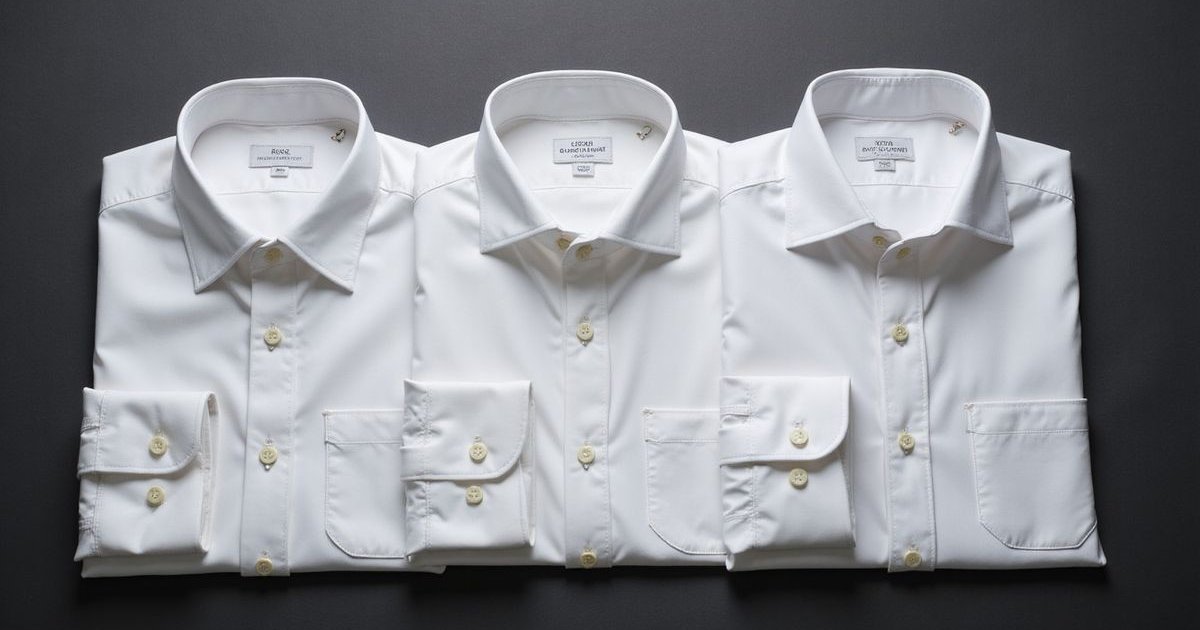
The collar is the most expensive square inch of cloth on a dress shirt. Not in terms of fabric, but in terms of visual impact. It frames your face on every video call into Petronas Towers, anchors every tie knot, and sets the formality of every outfit you assemble around it.
And yet most of the professionals we meet at the Sungei Wang studio have never made a deliberate collar choice in their life. They wear whatever the shirt happened to come with, then wonder why some shirts photograph well and others don’t. The answer, almost always, is the collar.
This is the working guide we use at the bench to help clients pick collar styles that suit their specific face, their tie habits, and the realities of Kuala Lumpur’s corporate environment.
Why Collar Architecture Actually Matters
A collar has four main variables: the spread (the angle and distance between the two points), the point length, the band height, and the tie space (the gap behind the tie knot).
Change any one of these and the look of the entire shirt shifts. A long-pointed spread collar with a tall band reads formal and continental. A short-pointed semi-spread with a moderate band reads casual and modern. A button-down with a soft roll reads relaxed and American.
There is no universal “best” collar. There is only the right collar for your face, your jacket choices, and your environment.
Spread Collar
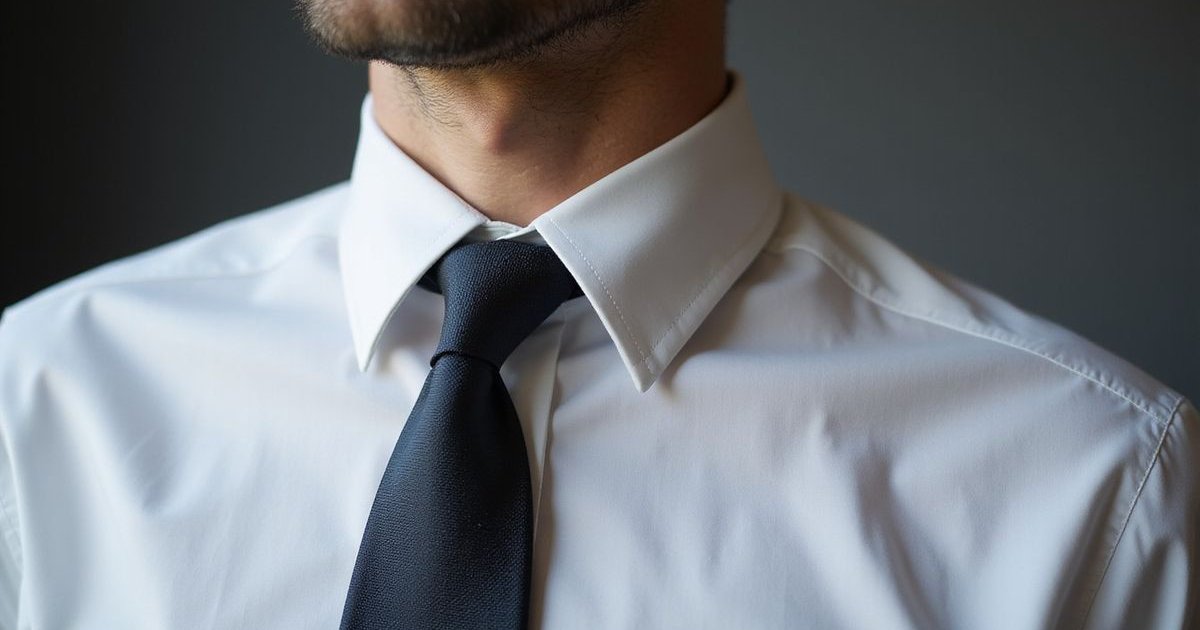
The spread collar is the most commonly seen style in modern Kuala Lumpur business wear, particularly in the financial towers around KLCC and Tun Razak Exchange. The points angle outward to create an opening of roughly 90 to 120 degrees.

Best for:
- Long or narrow faces, where the horizontal opening visually balances vertical features.
- Larger tie knots like the Half-Windsor or Full Windsor.
- A confident, “European executive” aesthetic.
- Modern jacket lapels with a wider notch or peak.
Watch out for:
- Small or thin tie knots, which look lost in the wide gap.
- Collar points that fail to tuck under the jacket lapel cleanly.
Point Collar
The classic American business collar. Straight points, narrow spread, vertical orientation. Sometimes called a “straight point” or “forward point.”
Best for:
- Round or wide faces, where the vertical points create a slimming effect.
- Smaller tie knots like the Four-in-Hand.
- Conservative legal and corporate environments where tradition still rules.
- Profiles where you want the eye drawn to the face rather than away from it.
Watch out for:
- Long collar points that curl without proper stays.
- Large tie knots that push the points outward and create a bulge.
- Looking “dated” in fashion-forward creative settings.
Semi-Spread Collar
The middle path. A moderate opening between point and spread, around 4 inches between point tips. Sometimes called the “modified spread.”
Best for:
- Most face shapes, since the proportions are visually neutral.
- Building a versatile capsule wardrobe of dress shirts.
- Half-Windsor knots, which fill the gap perfectly.
- Clients who don’t want to think about whether their collar matches the day’s environment.
Watch out for:
- A slightly anonymous look. The semi-spread is “safe” rather than distinctive.
Cutaway Collar
The extreme spread, with points angling almost horizontally apart. A bold style that has come back into favour with style-conscious professionals.
Best for:
- Statement dressing in creative or design industries.
- Substantial tie knots that fill the wide opening.
- Tieless wear, where the points naturally frame the open neck.
- Anyone who wants to look immediately polished without trying too hard.
Watch out for:
- Conservative interview settings where it may read as flashy.
- Jacket lapels with a narrow gorge, where the collar may not tuck cleanly.
The Button-Down Collar
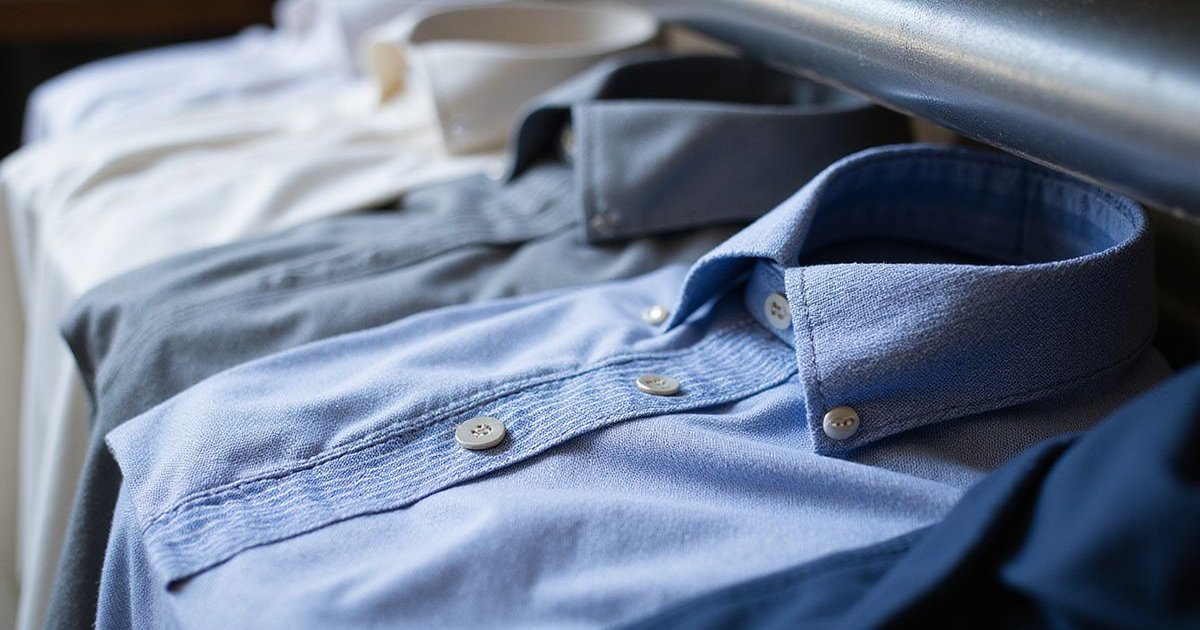
The American invention from Brooks Brothers in the 1890s, originally designed for polo players. The collar points fasten to the shirt body with two small buttons.
A great soft button-down has a beautiful “roll” where the cloth curves naturally between the band and the buttons. We love this on quality Oxford or chambray cloth, where the texture catches light beautifully.

Best for:
- Smart-casual environments, common in Bangsar South tech offices and creative studios.
- Oxford cloth, flannel, and other textured cottons.
- Wearing without a tie, where the buttoned points keep the collar standing.
- Layering under a knitted jumper or unstructured jacket.
Watch out for:
- Formal events, where the button-down reads as too casual.
- Pairing with double-breasted jackets or evening wear.
- Leaving the points unbuttoned, which looks careless rather than relaxed.
Club Collar
A vintage style with rounded points instead of pointed ones. Originated at Eton College in the 1850s and has come back into fashion periodically, most recently after appearances in shows like Peaky Blinders.
Best for:
- Vintage-inspired outfits with tweed jackets or heritage cloth.
- Softening a strong angular jaw.
- Wearing with a metal collar pin.
Watch out for:
- Looking costumey if the rest of the outfit isn’t equally considered.
- Limited availability outside of custom shirt makers.
Tab Collar
A small fabric tab connects the two collar points behind the tie knot, forcing the tie forward and creating a clean architectural arch.
Best for:
- Clients who love wearing ties and want to showcase the knot.
- Formal evening events.
- Long-necked clients who want a higher visual collar stance.
Watch out for:
- The tab requires a tie. You cannot wear this shirt open.
- The fastening can be fiddly when you are running late for a meeting at Menara Maybank.
Collar Height: The Variable Almost Everyone Ignores
Most off-the-rack shirts use a standard collar band height of around 3.5 to 4 cm. But the right band height depends on your neck length.
Taller bands (4.5 to 5 cm) create a more formal, commanding presence and work well for clients with longer necks. They fill the visual space between shoulder and jaw.
Shorter bands (2.5 to 3.5 cm) feel more relaxed and modern, and they work better for clients with shorter necks who would otherwise have the collar dig into the chin.
A custom shirt lets you specify this variable to the millimetre. It is one of those small touches that makes the difference between a shirt that fits and a shirt that fits perfectly.
Matching Collar to Face Shape
There is no rigid rule, but geometry helps. We use this reference at the bench:
| Face Shape | Recommended Collar | Why |
|---|---|---|
| Round | Point Collar | Vertical lines visually elongate. |
| Long | Spread or Cutaway | Horizontal lines balance the length. |
| Square | Club or Semi-Spread | Soften strong angular jaw lines. |
| Heart-Shaped | Semi-Spread | Balances a wider forehead. |
| Diamond | Spread | Widens the visual jaw to match cheekbones. |
Matching Collar to Tie Knot
The tie knot must match the collar opening. A mismatch creates either a strained gap or visible bunching.
- Full Windsor needs Spread or Cutaway.
- Half Windsor works with Spread or Semi-Spread.
- Four-in-Hand suits Point, Semi-Spread, or Button-Down.
- Bow Tie needs a high band and either a Wing Collar for formal evening or a Point Collar for daytime.
Why Custom Shirts Matter for Collar Choice
Off-the-rack shirts are designed for averages. They cannot account for a client with a longer-than-average neck, asymmetric ear placement, a strong jawline, or a personal preference for slightly higher collar bands. Every one of those variables can be specified on a custom shirt.
At ONE Exclusive Tailor we keep collar templates in dozens of variations and we can adjust point length, spread angle, band height, and tie space to the exact configuration that suits you. Once you have worn a properly proportioned collar, it becomes very difficult to go back to off-the-rack defaults.
Visit the Atelier
If you want to see and feel the difference between collar styles in person, book a consultation at our Bukit Bintang studio. We will try several configurations against your face, talk you through the trade-offs, and help you build a custom shirt wardrobe that suits the way you actually live and work in Kuala Lumpur.
Vincent Cheah
Master tailor with Savile Row Academy training. Vincent brings over a decade of bespoke craftsmanship to every garment.