How a Dress Shirt Should Actually Fit: A KL Professional's Guide
A precise checklist for dress shirt fit, written for Kuala Lumpur professionals navigating tropical weather and modern proportions.
The dress shirt is the single most worn garment in a Kuala Lumpur professional’s wardrobe and the one most consistently fitted incorrectly. We see it every week at the Sungei Wang studio. A client walks in wearing a perfectly respectable Italian shirt off a Pavilion KL rack and within seconds we can identify the four or five points where the fit is failing them.
A poorly fitted shirt undermines everything you wear over it. The jacket cannot do its job. The tie hangs at the wrong angle. The cloth balloons at the waist or pinches at the collar. By midday in the KLCC heat, you are tugging, adjusting, and quietly wishing you had stayed at the office.
This guide is the working checklist we use at the bench. It is written for Kuala Lumpur conditions and for a 2026 silhouette, which has moved on substantially from the boxy proportions of the previous decade.
Start at the Collar Because Everyone Else Looks There First
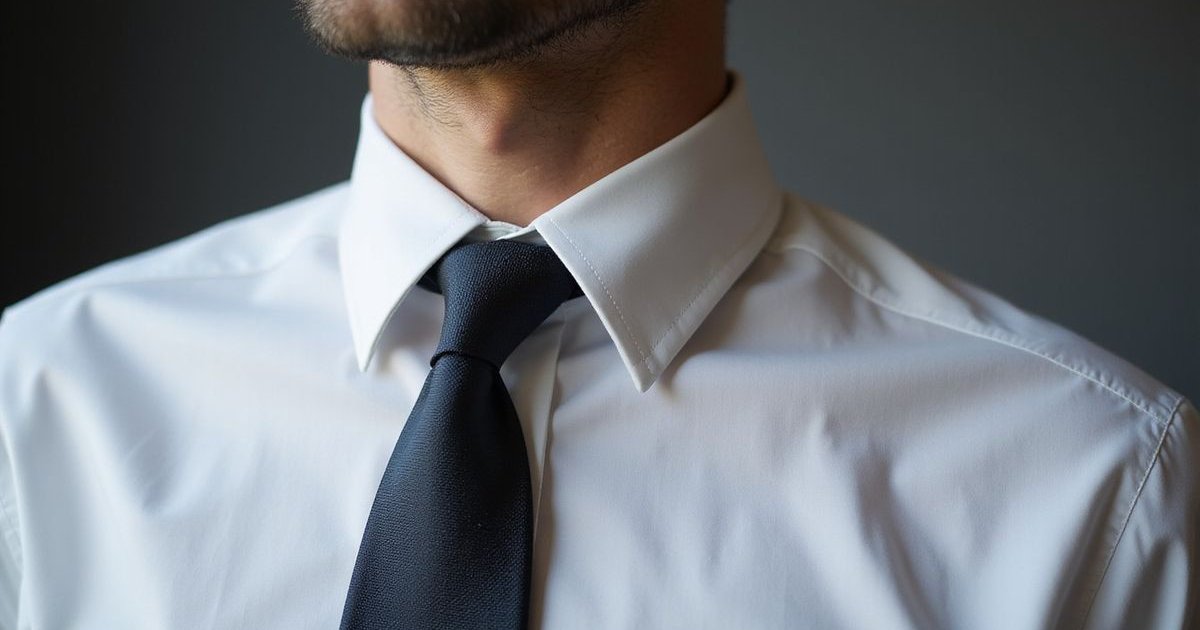
Your collar frames your face on every video call, every meeting, and every photograph. It is the most visible fit point on your body, and it is the first thing a discerning observer notices.
Neck circumference test. With the top button fastened, you should be able to comfortably slip two fingers between the collar band and your neck. One finger means the collar is too tight and you will feel strangled by 11am. Three fingers means it is loose and the collar will gap visibly when you move.
Collar band height. This is the part most off-the-rack shirts get wrong. The standard band is around 3.5 cm tall, but Kuala Lumpur clients with longer necks often look better in 4.5 cm bands while shorter-necked clients need closer to 3 cm. A custom shirt lets you specify this to the millimetre.
Collar interlining. Walk into any humid KL afternoon in a shirt with cheap collar interlining and you will discover the dreaded “wet noodle” effect within an hour. The collar collapses, the points curl, and the whole shirt looks tired. We use specific interlinings calibrated for tropical humidity precisely because of this.
Visible above the jacket. When wearing a suit, about half a centimetre of shirt collar should be visible above the jacket collar all the way around. Less and you look swallowed. More and you look like the jacket is the wrong size.
Shoulders: The Foundation of Everything That Follows
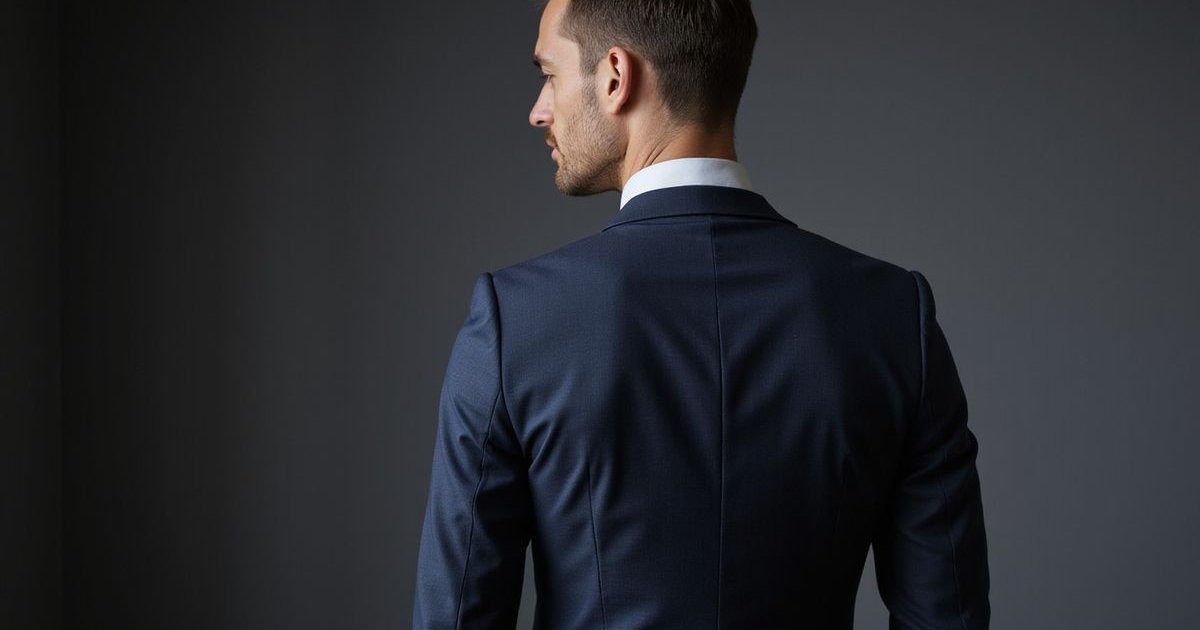
Your shoulder seam should sit exactly at the bony point where the shoulder ends and the arm begins. Not on top of the shoulder, not down the arm.
We see two common failure modes in KL. The first is dropped shoulders on slim-build clients who bought a shirt designed for a broader frame. The second is restricted shoulders on athletic clients who needed a wider cut but couldn’t find one in standard sizing.
A Note on Split Yokes
The yoke is the panel of cloth across the upper back. A “split yoke” is constructed in two pieces cut at a slight angle, giving you better range of motion and a cleaner drape across asymmetric shoulders. Most people in Kuala Lumpur have one shoulder slightly lower than the other, often the one that carries a bag through KL Sentral every day. A split yoke compensates for this naturally.

The Body: Tapered, Not Tight
A shirt body should follow the line of your torso without clinging.
Tailors use the word “ease” to describe the difference between your actual chest measurement and the shirt’s chest measurement. We aim for around 8 to 10 cm of ease for a clean modern fit. Most off-the-rack “classic fit” shirts run 15 to 20 cm of ease, which produces the boxy, ballooning look that has been out of style for ten years.
When standing naturally, the cloth should rest cleanly against your body without pulling. When you raise your arms, the shirt should stay tucked rather than pulling out of the trousers. When you sit, the buttons should not strain.
Chest, Waist, and Back Darts
The chest needs to lie flat. If you see horizontal tension lines or X-shaped creases at the buttons, the chest is too tight.
The waist often needs suppression, especially for clients with athletic shoulders and a narrower midsection. We use back darts (two vertical seams sewn into the back) to remove excess cloth without compromising movement. The result is a shirt that visibly tapers without restricting your day.
In Kuala Lumpur this taper matters more than in cooler climates. A shirt with excessive cloth at the waist will trap heat, billow when you walk through Bukit Bintang, and look terrible the moment you tuck it in.
The Sleeves
Length. With your arms hanging naturally, the cuff should end exactly at the base of your thumb where the wrist bone sits. When wearing a jacket, about half a centimetre of cuff should show below the jacket sleeve.
Cotton shrinkage. This is critical and most people forget it. Premium cotton shirts will shrink one to three percent over the first few washes. We always cut sleeves slightly long to account for this.

Sleeve width. The sleeve should slide cleanly over the forearm without restriction or excessive bunching at the elbow.
Armhole position. A high armhole gives better range of motion and stops the shirt from untucking when you raise your arm. This is one of the largest single differences between a custom shirt and any off-the-rack alternative. Factory shirts almost always cut the armhole low to fit a wider range of bodies.
The Cuffs
Snugness. Should be tight enough not to slip over your hand when unbuttoned, loose enough to accommodate a watch and one finger comfortably when fastened.
Watch wrist accommodation. If you wear a substantial timepiece, we add roughly 1 to 2 cm of circumference to the watch-wrist cuff specifically. This is one of those small details only a custom shirt allows.
Length. The cuff should cover the wrist bone fully and extend slightly beyond the jacket sleeve when worn under a suit.
Style. Single-button barrel cuffs are the daily standard. Double cuffs (French cuffs) are dressier and work for evening events or formal corporate environments. We often build clients a mix of both.
The Back and Movement Test
Reach forward as if grabbing a steering wheel. The back of the shirt should allow this movement freely without binding across the shoulders or pulling the hem out of your trousers.
A small box pleat or side pleats at the back help accommodate this movement on traditional cuts. On modern fitted cuts, we instead rely on a higher-quality pattern and a split yoke.
Common Fit Failures We See in Kuala Lumpur
These are the issues we diagnose almost every week at the Sungei Wang studio:
- Collar gap behind the neck. Caused by an oversized collar band or the wrong collar style for the wearer’s posture.
- Billowing waist. Insufficient body taper or wrong overall size.
- Pulling at the placket. Chest or waist measurement too tight; the buttons strain horizontally.
- Sleeve length wrong on one arm. Most people have asymmetric arm length. Off-the-rack shirts cannot account for this. Custom shirts can.
- Untucking when reaching. Armhole cut too low, or back length too short.
- Boxy “wet T-shirt” effect after washing. Wrong collar interlining, wrong cloth weight, or both. A KL shirt needs the right interlining or it will not survive the climate.
Why a Custom Shirt Solves Each of These
Off-the-rack shirts are built around an “average” body that does not actually exist. The classic 15.5/34 collar/sleeve combination assumes a specific proportion of chest, waist, shoulder slope, and body length, and if your body deviates from those assumptions, you are out of luck.
A custom shirt takes your individual measurements, your asymmetries, your watch-wrist preference, and your posture, and constructs a shirt designed only for you. The shoulder seam sits where it should. The taper follows your specific build. The collar height is set to your face shape. The cuff handles your timepiece.
What This Costs in Kuala Lumpur
A custom shirt at ONE Exclusive Tailor begins at the entry of our cloth book, which features Thomas Mason and Albini cottons. The price difference between a quality off-the-rack shirt at Pavilion KL plus the alterations needed to make it fit is often quite small once you do the maths honestly. And the resulting fit is genuinely incomparable.
Once you have experienced a properly fitted shirt, returning to off-the-rack becomes difficult. Clients describe the shift in language that surprises them. The shirts they used to wear suddenly feel sloppy and unfinished by comparison.
If you would like to feel the difference for yourself, visit our Bukit Bintang studio for a complimentary consultation. We will measure properly, walk you through cloth options, and explain exactly why every detail of fit matters in our particular city’s climate.
Vincent Cheah
Master tailor with Savile Row Academy training. Vincent brings over a decade of bespoke craftsmanship to every garment.