Premium Shirt Fabrics Explained: Thomas Mason, Albini and Beyond
A working guide to the world's finest shirt fabrics from a Kuala Lumpur master shirt maker. What separates premium cotton from the rest, and how to choose for the KL climate.
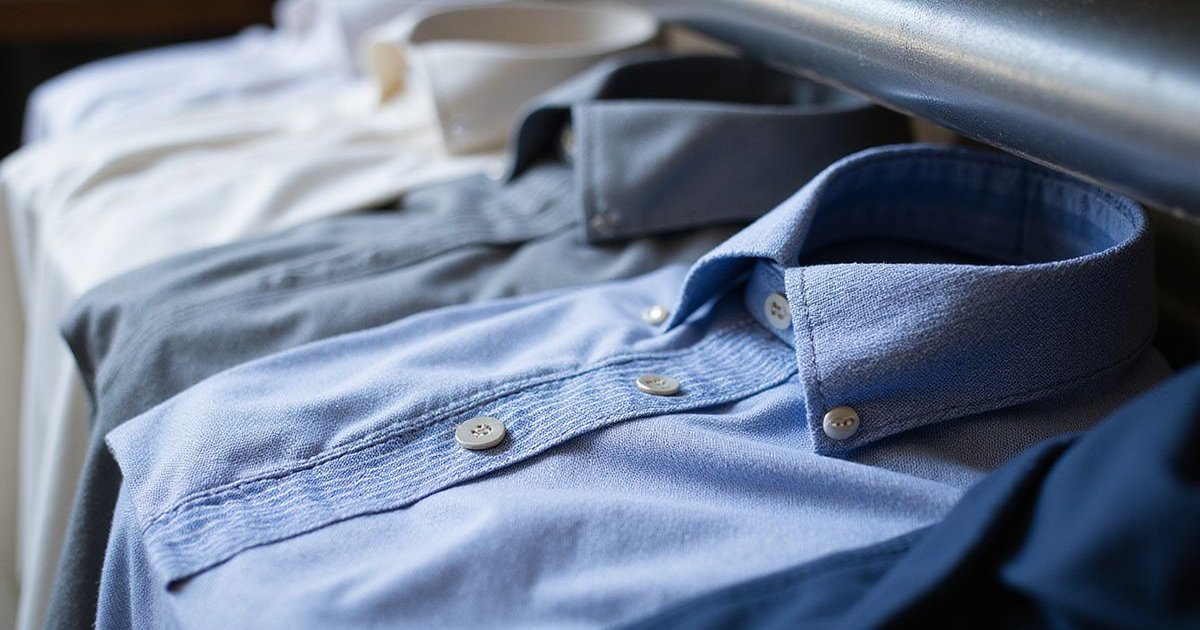
When clients commission a custom shirt at our Bukit Bintang atelier, they tend to arrive obsessed with one thing: the fit. Within five minutes at the cloth book, they realise the cloth choice is going to matter just as much. The fit defines how the shirt sits on the body. The fabric defines how the shirt actually lives in Kuala Lumpur’s climate.
We have been building shirts for KL professionals for over two decades, and the same lesson keeps appearing. A perfectly cut shirt in a cheap, short-staple cotton will look tired within a year. A properly cut shirt in a premium two-ply weave will outlast three generations of fast-fashion alternatives and still look sharp on a 33 degree afternoon in Bangsar.
This guide is the working version of the conversation I have with clients across the bench. It covers the mills that genuinely matter, the technical specifications that actually move the needle, and the weave choices that suit the realities of tropical professional wear.
The Mills We Trust on the Bench
There are perhaps a dozen shirting mills in the world that consistently deliver cloth at the level a custom shirt deserves. We hold accounts with several. These are the ones that earn their place in our cloth books.
Thomas Mason (Italy via Lancashire heritage) Founded in Lancashire in 1796 and now part of the Albini Group while keeping its own distinct identity, Thomas Mason holds an archive of more than 700 volumes of historic textile design. Their Goldline collection uses long-staple Egyptian Giza 45 cotton and develops a beautiful soft hand after the first dozen washes. We use Goldline frequently for clients who want a shirt with proper presence on a video call into Petronas Twin Towers.
Albini (Italy) Family-run since 1876 and the largest European manufacturer of shirting cloth. Albini is fully vertically integrated, controlling everything from cotton sourcing to weaving in Bergamo. Their BIOFUSION range, produced from traceable organic cotton, is one of the most reliable choices we offer to clients who care about provenance.
Canclini (Italy) Based near Lake Como, Canclini began with silk in the 1920s before moving into cotton, and that finishing heritage shows. We tend to recommend Canclini for slightly softer, more relaxed shirts: a Saturday lunch in Bangsar Village rather than a Monday morning in TRX.
David & John Anderson (Italy) A premium house under the Albini umbrella that produces ultra-fine yarns at 200/2 and 300/2 counts. These shirts are remarkable but require careful laundering. We discuss them honestly with clients and only recommend them when the wearer has the support to look after them.
We weight our cloth book towards Thomas Mason and Albini because, in twenty-two years on the bench, they have never let us down on consistency, durability, or colour reliability.
What Actually Determines Cotton Quality
A lot of the language used in shirt marketing is theatre. Three technical factors actually determine how a shirt will perform.
Staple Length
The length of an individual cotton fibre, called the “staple,” is what separates premium cloth from cheap cloth. Longer fibres produce smoother yarns with fewer joins, which means less pilling, less roughness, and a fabric that becomes more comfortable rather than more tired with each wash.
- Extra-Long Staple (ELS): Fibres longer than 35mm. Includes Pima and Supima from the Americas.
- Giza 45: Cultivated in a small region of the Nile Delta and harvested by hand. Often called the “queen” of Egyptian cottons.
- Sea Island: Caribbean-grown, exceptionally rare, accounting for less than half a percent of global production.
Anything sold simply as “100 percent cotton” with no information about staple length is almost certainly short-staple. Avoid it for any shirt you intend to wear seriously.
Yarn Count and Ply
You will see numbers like 100/2 or 140/2 stamped on a swatch. The first number is the fineness of the yarn. The second is how many strands have been twisted together (the “ply”).
| Specification | Character | Best Use in KL |
|---|---|---|
| 80/2 to 100/2 | Sturdy, slightly heavier, very durable | Daily wear, frequent travellers, hot and humid days |
| 120/2 to 140/2 | Refined, silky, slightly lighter | Boardroom meetings, evening events |
| 170/2 and above | Extremely fine, delicate, wrinkles easily | Black tie, special occasions only |
| Single ply | Cheaper, less robust | Casual shirts at low price points |
We almost always recommend two-ply for KL clients. Two-ply weaves are stronger, more stable, hold their shape through repeated humid days, and survive the local laundry treatment far better than single ply.
Mercerisation and Finishing
A raw woven cotton is rough and unstable. Top mills run their cloth through a process called mercerisation, which swells the fibre, increases lustre, locks in colour, and reduces shrinkage. Cheaper mills skip this step or fake it with surface softeners that wash out within a month.
You can usually tell. A well-mercerised cotton has a quiet shine and a smoothness that survives repeated laundering. A poorly finished cotton starts to look chalky after the first dozen washes.
The Weaves That Matter for KL Wardrobes
The weave determines how a shirt drapes, breathes, and behaves through a humid Kuala Lumpur day. We guide every client toward weaves that match their environment, not just their aesthetic.
Poplin (Broadcloth)
The classic, dressy, smooth-faced weave with a simple over-under structure.

- Weight: Typically 100 to 110 gsm. Light enough for KL afternoons.
- Look: The smoothest, dressiest finish. Sits cleanly under any suit jacket.
- Trade-off: Wrinkles more readily than any other weave.
For meetings in KLCC where a proper crisp shirt matters, poplin remains the standard.
Twill
A diagonal weave that drapes more heavily and resists wrinkles.
- Weight: Slightly heavier than poplin, usually 120 to 140 gsm.
- Look: Subtle diagonal texture, hides minor fit issues.
- Trade-off: Can run warm. We push KL clients towards lighter “Imperial Twills” specifically for the climate.
Twill is my default suggestion for clients who travel a lot between KL, Singapore, and Hong Kong. It survives a suitcase remarkably well.
Oxford Cloth
A basket weave originally designed for nineteenth-century polo shirts. Heavier, textured, ages beautifully.

- Weight: Usually 160 gsm or higher.
- Look: Visible texture, smart-casual character.
- Trade-off: Often too thick for a hot midday meeting in Bukit Bintang.
We tend to recommend Oxford for clients with smart-casual wardrobes in Bangsar South, Mont Kiara, or Damansara Heights, where the texture earns its place under an unstructured jacket.
Royal Oxford
Despite the name, this is closer to a luxury dress weave than a casual oxford. Finer yarns produce a small diamond-like surface.
- Look: Subtle shimmer, very dressy yet textured.
- Behaviour in KL: Surprisingly breathable thanks to the open weave.
- Trade-off: Can snag on a watch clasp.
Herringbone
A twill variation where the diagonal reverses, creating a “V” effect.
- Look: Adds visual depth to solid colours.
- Behaviour: Easy to iron, resists creasing.
- Trade-off: Slightly heavier than poplin.
End-on-End (Fil-à-Fil)
A poplin variant that combines a white thread with a coloured thread, producing a heathered look from a distance and a crisp solid up close.
- Look: Lively colour depth that flat solids cannot replicate.
- Trade-off: Same wrinkle behaviour as poplin.
How to Choose Cloth in Kuala Lumpur
Selecting shirt cloth in our climate is a different exercise than in London or Tokyo. The decision tree we use at the bench has four nodes.
1. Microclimate of Daily Life
A client who walks from a covered Mont Kiara car park into a heavily air-conditioned KLCC office has very different needs from one who takes the LRT through KL Sentral and walks ten minutes to a meeting in TRX. The first can wear a heavier twill comfortably. The second needs poplin or a tropical weave.
2. Formality of the Environment
Match the texture to the room. Smooth poplin and fine twill for high-formality boardrooms. Texture (Oxford, Royal Oxford, herringbone) for tech offices, creative studios, and smart-casual hospitality settings.
3. How You Actually Launder
Be honest. If a shirt is going to a Petaling Jaya laundry service, choose a robust two-ply twill that can survive the press. If you have a careful home routine, you can stretch into the higher counts.
4. Where the Gaps in Your Wardrobe Are
Most KL professionals already own too many plain blue shirts. Adding a textured white herringbone or a soft Royal Oxford expands your options far more than another flat sky blue.
Colour and Pattern Discipline
The cloth provides the structure. The colour and pattern provide the character.
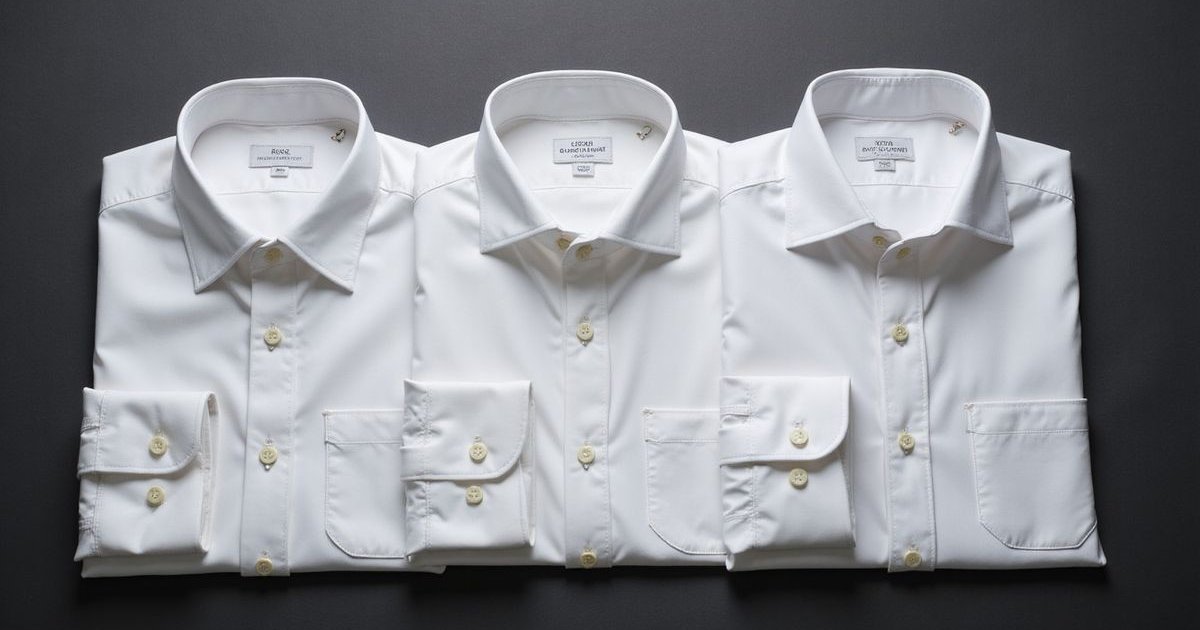
Foundation colours. White (ideally three: poplin, twill, Royal Oxford), and light blue. These are the backbone of any KL professional wardrobe.
Expansion colours. Lavender, soft pink, ecru, and very pale grey. All work beautifully with charcoal, navy, and mid-grey suits.
Patterns to consider. Bengal stripes for visual length, micro-checks for subtle interest, gingham for weekend smart-casual.
What This Costs
Premium cloth is the largest single driver of price in custom shirts. A Thomas Mason or Albini shirt at our bench typically lands between RM 750 and RM 1,200 depending on cloth tier and finishing details. A shirt in the 200-count Anderson territory will cost more.
By comparison, the equivalent of a department-store dress shirt at Pavilion KL or The Gardens Mall sits around RM 450 to RM 800, but the construction and cloth are not in the same conversation.
| Element | Department-Store Shirt | Bespoke at Our Bench |
|---|---|---|
| Cotton | Generic short-staple, prone to pilling | Egyptian Giza or premium two-ply |
| Buttons | Plastic | Mother of pearl |
| Sizing | Neck and sleeve only | 15+ measurements |
| Realistic lifespan in KL | 30 to 50 washes | 150+ washes with care |
A Six-Shirt Foundation for KL Professionals
After two decades of building shirt wardrobes for clients across the Klang Valley, this is the foundation I recommend:
- White poplin for the highest-formality meetings.
- Light blue twill for daily wear, frequent travel, easier care.
- White Royal Oxford as the texture-forward dress shirt.
- Blue Bengal stripe to add energy under a charcoal suit.
- Pink or lavender micro-check for client lunches and social meetings.
- Heavy blue Oxford for smart-casual weekends in Bangsar or TTDI.
These six will cover almost every situation a Kuala Lumpur professional encounters in a year.
Visit the Cloth Books
No website article can replicate the experience of feeling an Imperial Twill against your hand or watching how a Royal Oxford catches the afternoon light through our atelier window in Sungei Wang Plaza.
If you would like to choose cloth properly, book a consultation at our Bukit Bintang studio. We will pull books from Thomas Mason, Albini, Canclini, and the rest of our cloth library, and walk you through what works for the way you actually live and dress in Kuala Lumpur. There is no obligation to commission anything on the day.
Vincent Cheah
Master tailor with Savile Row Academy training. Vincent brings over a decade of bespoke craftsmanship to every garment.