The True Cost of a Bespoke Suit: A KL Tailor's Honest Breakdown
An honest, line-by-line look at where the money goes in a bespoke suit from a Kuala Lumpur master tailor's bench. Cloth, hours, overheads, and the maths of cost-per-wear.
Every week at the Sungei Wang studio, a new client sits down, looks at the cloth book, and asks the question I have been hearing for twenty-two years. “Why does a bespoke suit cost what it costs?” It is a fair question, and one I prefer to answer with full transparency rather than mystique.
Walk into Pavilion KL or The Gardens Mall and you can buy a wearable jacket for under RM 800. Walk a few blocks to our atelier and a bespoke commission begins around RM 5,500 and can climb past RM 18,000 depending on cloth. The gap is large enough to deserve a proper explanation.
This is the breakdown I give to anyone who genuinely wants to understand where the money goes. No marketing language, just the maths of how a bespoke garment is actually built in Kuala Lumpur.
Cloth: The Number Most People Underestimate
Of every line item in a bespoke commission, the fabric is usually the most visible variable in price. We hold accounts directly with the British and Italian mills that supply Savile Row, including Holland & Sherry, Loro Piana, Scabal, Zegna, and Vitale Barberis Canonico.

The cloth is not simply “wool.” It is wool from specific flocks, spun on specific machinery, woven at specific mills, and finished by hand processes that have not changed materially in a century. The result is a fabric that drapes properly, recovers from a long day in KL traffic, and holds its colour through years of wear.
For Kuala Lumpur clients, my standard recommendation is a high-twist worsted in Super 110s or 120s, often in a Fresco or tropical weight between 240 and 280 grams. These cloths breathe through our humidity, resist wrinkling on the drive between Mont Kiara and KL Sentral, and last for years.
We can absolutely go finer. A Super 180s with a hint of cashmere is genuinely special, but it is also more delicate. I always tell clients honestly: in our climate, a sturdy 110s usually outperforms a fragile 180s for everyday wear.
Cloth typically lands between 20 and 30 percent of the total commission cost.
Drafting a Pattern That Belongs Only to You
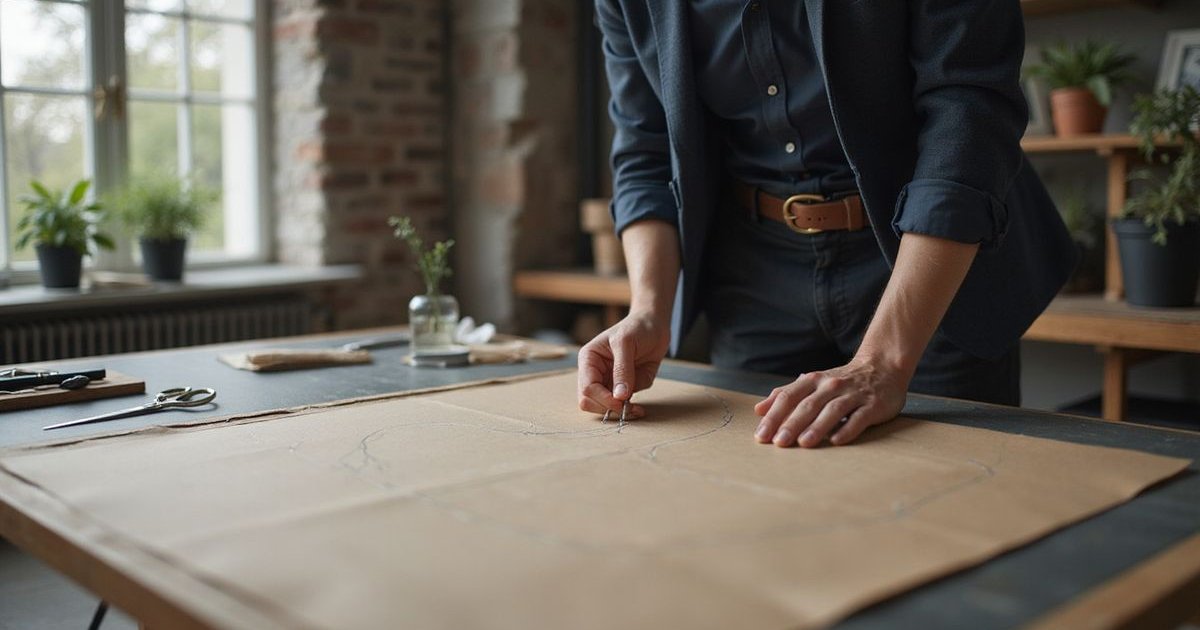
Every bespoke suit at ONE Exclusive Tailor begins with a fresh paper pattern, drafted by hand for your specific body. There is no computer block, no “size 40 modified,” no shortcut.
This is where the experience matters. Our head pattern cutter Ahmad Rizal has fifteen years on the bench. When he draws your pattern, he is reading dozens of small things in your posture: a slightly forward-rolled shoulder from years at a desk in Tun Razak Exchange, a small asymmetry between left and right arm, a stance that favours one leg.
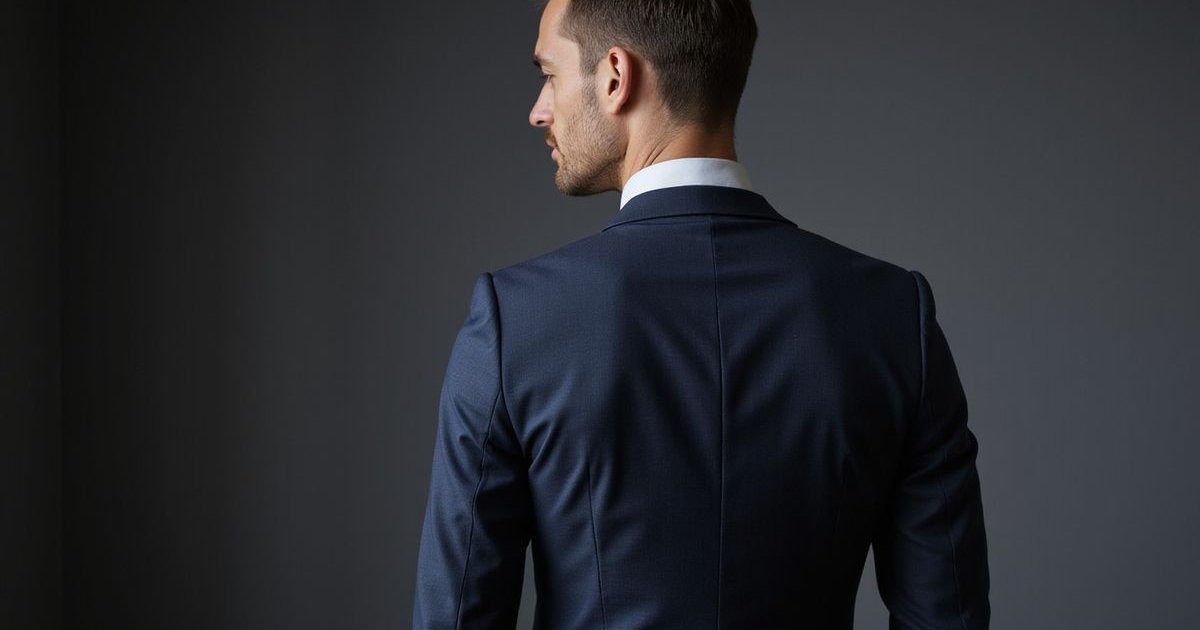
Drafting for your body is the difference between a suit that hangs from you and a suit that lives with you. It is also one of the slowest, most labour-heavy stages, and it cannot be rushed.
Cutting: Where Expensive Cloth Becomes Irreversible
Once the pattern is finalised, the cloth is laid out on the bench and cut by hand. There is no laser, no plotter.
We position every panel to align stripes, checks, and grain across seams. A misjudged cut on a length of Loro Piana ruins the cloth and adds days to the build. This is not a stage anyone with experience hands to a junior. The cutter takes responsibility for what comes next, and the discipline is part of what you are paying for.
The Bench: Where the Real Hours Live
The largest single category of cost in any bespoke suit is labour. A properly built jacket requires somewhere between 60 and 90 hours of skilled handwork. Every one of those hours has to be paid.
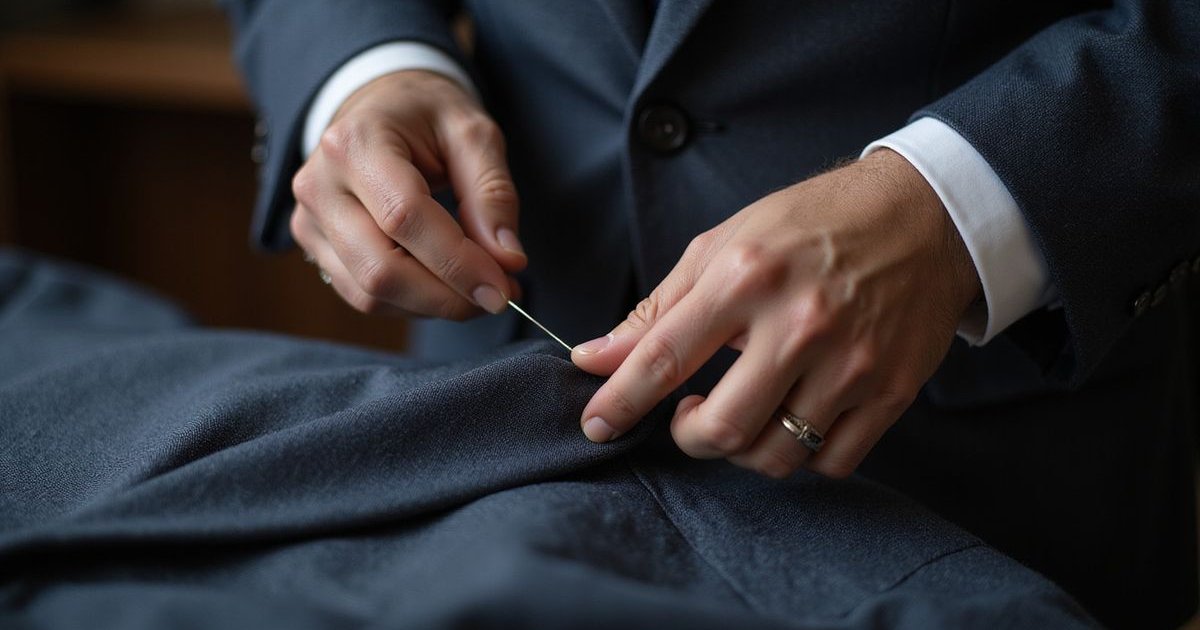
Building the chest. A bespoke jacket is built on a floating canvas of horsehair, wool, and chest piece, all hand-padded together. This is the structure that gives a jacket its shape. It takes hours of fine pad-stitching to gradually build curve into the lapel and chest, and the result is a layer that flexes with you, breathes through KL humidity, and moulds to your body over years of wear.

The hand-finished details. These are the fingerprints of a real bench:
- Pick stitching along the lapel and edges, holding everything cleanly without machine flatness.
- Hand-attached collar that beds properly onto the back of the neck.
- Working buttonholes at the cuff, each cut and sewn by hand in silk. A single buttonhole can take 25 to 30 minutes.
- Lining attached by hand so the jacket can be opened up and rebuilt years later.
A factory in Asia or Europe can press out a fused jacket in two to three hours. We spend that long on the canvas alone.
Bespoke Canvas vs Fused Construction
| Element | Bespoke Hand-Canvassed | Mass-Market Fused |
|---|---|---|
| Internal structure | Floating wool and horsehair canvas | Glued synthetic interlining |
| Behaviour over time | Moulds to your body | Stays static, eventually bubbles |
| Tropical breathability | Open layers, air flows | Glue blocks airflow |
| Realistic lifespan in KL | 15 to 25 years with care | 2 to 4 years before failure |
In Kuala Lumpur’s heat and humidity, this is not a theoretical difference. A fused jacket genuinely fails faster here. We have seen the bubbling within eighteen months on cheap commissions brought in for repair.
The Fitting Cycle
A bespoke commission is not a single appointment. It is a relationship across several visits.
A typical KL commission moves through:
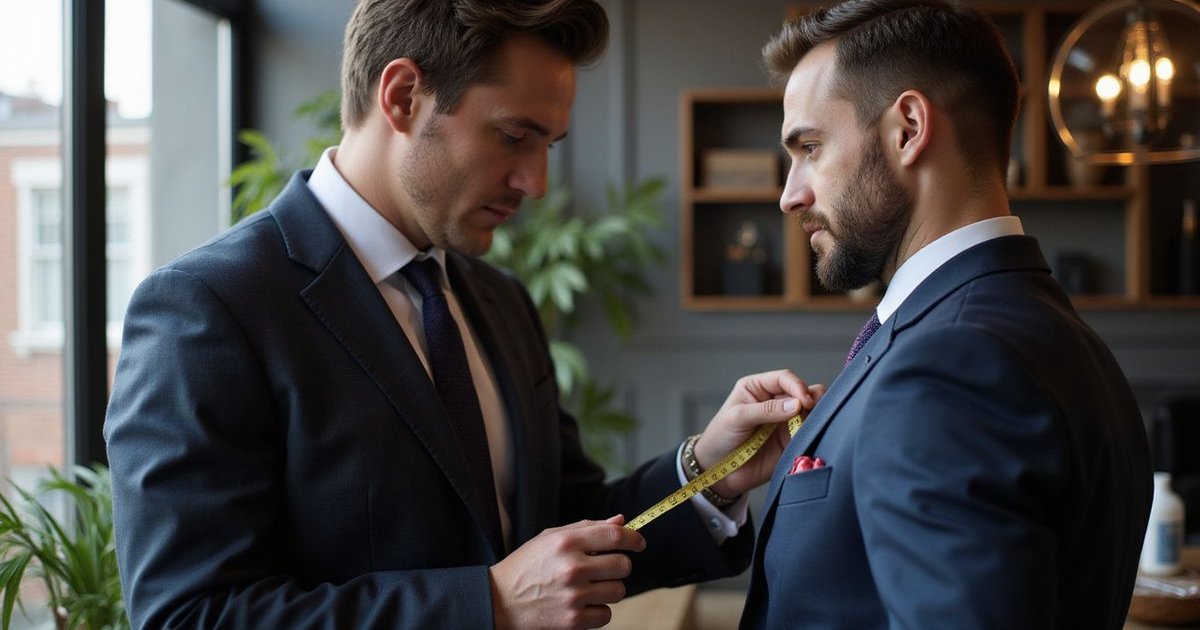
- Initial consultation and measurement at the Bukit Bintang studio, around 60 to 90 minutes.
- Baste fitting roughly three to four weeks later, where you try on the skeleton of the jacket held together in white basting thread. We adjust balance, shoulders, and silhouette.
- Forward fitting with the cloth properly assembled, where we check sleeve pitch, lapel roll, and trouser line.
- Final delivery, with any last adjustments dialled in.
Each fitting is hours of bench time, plus your time. It is the only honest way to deliver a garment that genuinely fits.
Running an Atelier in Kuala Lumpur
There is also the simple cost of operating a real workshop in Bukit Bintang. Rent at Sungei Wang Plaza is paid every month. Heritage tools, irons, sleeve boards, and pressing equipment are maintained or replaced. The team needs to be paid fairly so they stay long enough to develop the skill that takes a decade to build.
Nothing leaves the atelier. We do not outsource cutting to a back-room workshop or send canvasses to a factory. Every jacket we deliver is built under one roof at Lot F-108 in Bukit Bintang. That is part of what you commission when you commission us.
What Mass Production Actually Does
To understand the gap, it helps to look at the other side. A factory ready-to-wear jacket might use RM 80 to RM 200 of cloth, three hours of low-cost labour, fused canvas instead of hand-padded structure, and machine buttonholes done in seconds. The result is a wearable garment, but it is built for an “average” body that does not exist and a lifespan measured in seasons rather than decades.
When you pay for a bespoke suit at our bench, you are not paying for a label. You are paying for hours, training, structure, and a pattern designed for your body alone.
The Cost-Per-Wear Reality
The number that actually matters is cost per wear.
A RM 7,500 bespoke suit, worn weekly for fifteen years, works out to roughly RM 10 per wear. A RM 1,500 off-the-rack that fades and warps within two years works out to RM 14 per wear at far lower frequency, with worse fit, less comfort, and none of the alterability.
Three things stretch that maths even further in our favour:
- Longevity. We have clients still wearing jackets we built a decade ago, freshly serviced and looking sharp.
- Alterability. Bespoke suits are built with generous inlays for future adjustment as your body changes.
- Confidence. A garment built for your body lets you stop thinking about your clothes and focus on the meeting.
What a Commission at ONE Exclusive Tailor Includes
When you commission a bespoke suit with us, the price is the price. There are no surprise invoices for fittings, alterations, or pattern storage. Your cloth choice, your pattern, your fittings, your delivery, and the welcome to come back for adjustments as the years pass are all part of the relationship.
If you have never sat through a proper consultation at a bench, the easiest way to understand the difference is to come and feel it. Book a complimentary visit at our Sungei Wang Plaza studio. We will walk you through the cloth books, talk you through the maths in plain ringgit, and answer any question you have.
The investment is real. So is what you take home.
Vincent Cheah
Master tailor with Savile Row Academy training. Vincent brings over a decade of bespoke craftsmanship to every garment.